
Inside walkthrough: navigating every chapter of Playdead’s puzzle-platformer
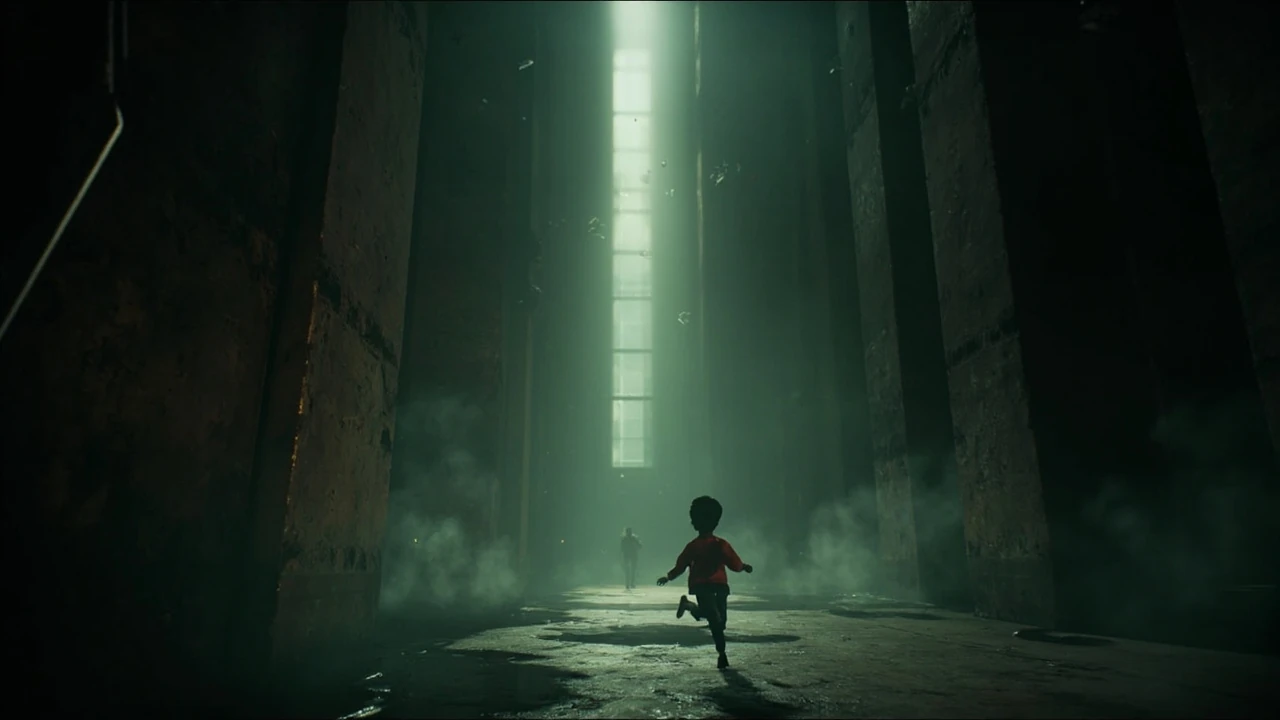
Inside is a 2.5D side-scrolling puzzle-platformer released by Playdead, the Danish studio behind Limbo. You control a red-shirted boy moving right through a series of dim, industrial environments. There is no dialogue, no heads-up display, and no quest log. Progress depends on reading body language, noticing subtle environmental cues, and understanding each chapter as a self-contained puzzle room. The game runs at sixty frames per second on modern hardware and uses a fixed camera in every scene, which is part of why the puzzles read so cleanly: the frame is curated, and the player only has to read what is on screen.
This walkthrough organizes the game into its natural chapter breaks as the design team laid them out, not the marketing screenshots. Each section describes the mechanics a player will meet, the tools available, and the order in which obstacles appear. The aim is to help a first-time player finish the game without spoilers for the ending, while giving returning players a clean reference for the trickier sections such as the submerged corridor, the mind-control room, and the long fall near the finale.
For a broader factual look at the title, including its release history and the way critics received it, the encyclopedia entry on the game itself is a good place to start. The sections below are written for someone who has not played the game before, but they are also structured so you can jump to a specific chapter if you are already mid-run and need a hint rather than a full route.
How this walkthrough is organized
The game does not expose level names on screen, so the walkthrough uses community-standard chapter titles that match how speedrunners and guide writers split the experience. Each section follows the same structure: a short description of the room’s central mechanic, the order of the main obstacles, and one or two practical notes on common stuck points. There are no puzzle answers spelled out as “press this switch then run here” because the game is short and the satisfaction comes from working the puzzle out. Instead, the walkthrough names the mechanic and the principle you should be testing, then lets you apply it.
If you only have ten minutes, read the chapter heading for where you are stuck and the “common stuck points” table at the end of the article. If you have more time and want to understand the game as a designed object, read the chapters in order. The two readings are independent of each other.
Controls and interface basics
Inside uses a small control set. Knowing the inputs before you start helps in the trickier sections where timing matters, and the chase sequences where the run input has to be held without interruption.
- Move left, right, crouch, and look up with the directional stick or keys.
- Run by holding the run input while moving, which is required for several long jumps, the rubble run, and the descent near the end of the game.
- Interact with objects by pressing the action button when the boy reaches a grabbable edge, lever, helmet, or body.
- Jump with a single button press. Holding the button does not change jump height; the run input is what changes distance.
- There is no inventory, no menu, and no map. The boy dies in one hit from most hazards, and the game reloads the last safe position almost instantly.
Because death is a teaching tool rather than a punishment, do not be afraid to die. Each respawn costs only a second, and the game often hides the next cue directly behind the hazard that killed you. If a room feels stuck, the first thing to try is dying on purpose to see where the respawn point is, because the safe position is itself a hint about the size of the puzzle segment the developer is testing.
Chapter 1: the forest and the truck
The first chapter establishes the rules of movement and interaction. The boy runs through a dark forest, reaches a road, climbs into the back of a moving truck, and is carried into a fenced compound. Mechanically, this chapter teaches three things: long falls kill, moving platforms require timing rather than reflex, and certain bodies on the ground can be controlled once you grab them. The walkthrough for this section is essentially “follow the path,” but pay attention to the second moving truck. The timing window to jump onto its rear platform is tighter than it looks and is the first real failure point for new players.
There is one more detail that tends to be missed on a first run. The first time the boy dies, the camera lingers on the body for a moment before respawning. This is not a bug or a story beat; it is the developer’s way of teaching the player that death is part of the vocabulary of the game. By the time the credits roll, the player has internalized that the body is disposable, which is exactly the state of mind the laboratory chapters require.
Chapter 2: the farm and the first underwater puzzle
Inside introduces its most distinctive mechanic here: a small underwater section where the boy can swim short distances. The first sub-chapter is a farm with patrolling guards. You cannot fight, so the entire chapter is solved by timing your movement between sight lines, hiding in tall grass, and using the environment to distract the guards. The puzzle design at this stage is linear, but the timing windows vary and reloading the same screen is normal.
The first underwater segment teaches the breath mechanic. The boy can hold his breath for a fixed time, which is long enough for a short dive but not long enough to clear a long corridor without help. A short air pocket appears roughly halfway through the first submerged tunnel, and the walkthrough pattern is: dive, swim, rise to the pocket, breathe, swim to the exit. The crucial detail is that pressing jump while underwater pushes you upward without costing extra air, which becomes essential in the longer submerged corridors later in the game.
On a first run, the farm section usually takes between five and ten minutes, mostly because players do not yet trust that the game will not punish them for being seen. The guards cannot actually shoot or chase the boy in this chapter; their role is to set up the rule that the player is small and the world is large. By the time the player leaves the farm, that rule has been accepted without being stated.
Chapter 3: the underwater laboratories
This is the section where most first-time players get stuck. You enter a long submerged corridor that forces you to chain breath mechanics with environmental aids. The room is a single elongated hallway with several air pockets at fixed heights, a moving platform, and at least one timed door. The principle is the same as chapter 2, but the corridor is longer and the air pockets are unevenly spaced.
Key things to test in this chapter:
- Look for bubbles on the surface. They mark pockets that are easy to miss against the dark background, and missing a pocket is the most common cause of death here.
- Do not waste air fighting the current. If the current pulls you, swim with it, then push back only when the corridor bends.
- Use the moving platform as a rest point. It sits at a depth that lets you breathe if you crouch at the top of its travel.
- Save the dash for the final stretch. The last third of the corridor is the longest continuous swim, and the temptation is to sprint the whole way.
There is a section where a submerged door must be triggered from a pressure plate on the floor. The walkthrough here is mechanical: stand on the plate, wait for the door to rise, swim through before it closes, and continue. The pressure plate resets the moment you step off, so do not try to chain anything else on top of it. The first time most players reach this screen, they try to hold the plate down with a body, which is not possible in this chapter; the plate is designed for the boy himself.
By the end of chapter 3, the player has learned that the game is willing to chain mechanics across a single room. The breath mechanic, the moving platform, and the timed door are not three separate puzzles; they are one puzzle with three layers. That layered approach is the template for the rest of the game.
Chapter 4: the mind-control room
After emerging from the water, the boy reaches a laboratory where a helmet device can be worn. Wearing the helmet lets you possess nearby human bodies, which is the second core mechanic of the game. The pattern repeats for the rest of the chapter: detach from one body, walk to a nearby helmet, and wear it to jump into another body standing in a fixed pose. Each possessed body has a role, and the puzzle is matching the role to the obstacle.
Roles and what they unlock in this chapter:
| Body role | What it does | Typical use in the chapter |
|---|---|---|
| Standing worker | Walks forward, pushes, pulls, and operates switches | Activates wall panels and opens timed doors |
| Seated technician | Can interface with consoles | Raises and lowers platforms, controls magnetic fields |
| Running worker | Moves automatically in a fixed direction | Crosses a gap that the boy cannot jump on his own |
| Crouched guard | Reaches low switches and crawlspaces | Accesses maintenance hatches and short crawlspace routes |
Two rules cover most of this chapter. First, you cannot wear a helmet while already inside a body, so you must always detach first. Second, the boy himself cannot survive long in the lab without a body, because certain rooms flood with a gas that kills him in seconds. The walkthrough pattern is to leave a safe body standing on a pressure plate while you, the boy, dash to the next helmet.
The longest puzzle in this chapter requires three bodies in sequence. Read the room before you commit: the third body is usually on a higher platform and cannot be reached from the floor, so you need to use the first body to raise a platform, then the second to position a third helmet, then the third to finish the room. The order of these bodies is the main source of confusion for new players, and there is no shortcut. The room is designed to be read, not brute-forced.
It is worth pausing here on what the chapter is doing thematically. The mind-control mechanic is not just a puzzle device; it is the game’s way of putting the player inside the world the boy has stumbled into. By the end of the chapter, the player has been asked to leave their own body and use other bodies as tools, and that habit carries through to the rest of the game.
Chapter 5: the parasite room and the blob
This chapter introduces the blob, a parasitic mass that fuses with dead bodies and follows the boy. The blob grows as it absorbs more corpses, and its size determines which gaps it can cross. Mechanically, the chapter is a tutorial for the third core system: parasitic growth. The walkthrough principle is that the blob always follows the boy but cannot climb or jump on its own, so you must guide it through ramps and drops that the boy can already clear.
The chapter has three sub-sections. The first is a single-screen puzzle where the blob must be led under a closing door, which is solved by luring a corpse to the door and waiting for the blob to fuse with it. The second is a longer room where the blob must cross a pit by absorbing a body on a platform. The third is a chase sequence where the blob follows automatically, and the boy only has to keep moving. None of these are difficult once you understand that the blob is a follower, not a tool. You do not direct it; you lead it.
There is one practical detail that catches players out. The blob’s hitbox is larger than the boy’s, so a gap that the boy can clear may be too small for an early-stage blob. The solution is to keep the blob small until you reach a room that requires a larger mass, then grow it deliberately. Players who try to grow the blob as fast as possible tend to get stuck on gaps the boy can already clear, because the blob’s width is now wider than the doorway.
Chapter 6: the city, the rubble, and the long fall
After the laboratory, the boy emerges into a ruined cityscape. The visual tone shifts here. Lighting is brighter, the environments are wider, and the puzzles involve longer falls rather than tight rooms. The chapter has two defining moments.
First is the rubble run. A section of the city collapses, and the boy must run right while debris falls behind him. This is the first chase sequence in the game and the first time the run button feels mandatory. Hold run, do not stop to look at the scenery, and jump when the camera tilts. There is no trick here, only commitment. The debris is timed to the player’s run speed, not to a fixed clock, so a player who hesitates will be caught even if the room is technically passable.
Second is the long fall. The boy steps off a ledge and falls for several seconds while the camera pulls back to show the scale of the city. You do not control the fall, but you must react at the bottom. A small vent breaks the fall, and the game wants you to push the boy into it using a timed jump. The principle is simple: keep watching the bottom of the screen and aim for the lit vent. There is only one safe landing, and the game restarts you very close to the fall if you miss.
On a replay, the long fall reads differently. The first time, it is a gameplay test. The second time, it is a piece of staging, because the player now knows what the fall is for. That shift is part of why the developers built the game to be played twice if the player wants to understand the story.
Chapter 7: the horde and the final descent
The final chapters lean on the blob mechanic. The blob has grown to the size of a small crowd, and the boy now rides on top of it, directing it through gaps and past obstacles. The walkthrough here is a sequence of tight rooms where the horde must be squeezed through narrow openings. Three things to keep in mind:
- The horde cannot fit through a gap that is smaller than its current width. Some rooms require you to reduce the horde first by sacrificing part of it into a grinder or a fan.
- Doors close based on the horde’s size, not the boy’s. If a door refuses to open, the horde may be too large to trigger the pressure plate on the other side.
- Some rooms are designed to be solved by separating the horde from the boy. Letting the boy walk ahead of the horde, then opening a door behind him, is a valid pattern in several sub-rooms.
The final descent is a single unbroken sequence of rooms that the developers intended to be played in one attempt. Each room is short, the puzzle is in the transition, and the timing is generous. If you reach this point, the walkthrough’s job is mostly to reassure you that the game does not get harder than this; it just keeps moving. Players who have struggled through chapter 3 and chapter 4 are often surprised at how short the final section is, but that is by design. The game is a three-hour experience, and the last hour is a release, not a test.
Ending: the blob’s release and the credits
The ending sequence is fixed and cannot be skipped on a first playthrough. The walkthrough will not describe it in detail because the design depends on the player not knowing what is about to happen. After the sequence ends, the credits roll over a slow camera pan, and the game drops you back on the title screen. There is no second ending hidden behind a choice you can make, and there is no post-credits scene. The credits are the ending.
New Game Plus does not exist. Save files are tied to completion, and the only thing that changes between a first run and a replay is your own speed and your willingness to test the boundaries of the mechanics. The developers designed the game to be played twice if you want to understand the story, and once is enough if you only want to see the rooms. Both readings are valid, and neither is treated as the “correct” one in any official material.
Common stuck points and how to read them
Most players get stuck on the same handful of puzzles. The table below maps the symptom to the underlying mechanic, which is usually the thing the room is testing.
| Symptom | Likely mechanic | What to test |
|---|---|---|
| You cannot find the next path forward | Switch hidden above eye level or behind a moving object | Look up, crouch, or wait for a moving platform to expose the switch |
| The door will not open even though a body is standing on the plate | The body is the wrong type, or two plates are needed | Detach, wear a different helmet, and check for a second plate |
| The blob will not follow you through a door | The gap is too small for the current horde size | Shrink the horde by sacrificing a section into a hazard, then retry |
| You keep drowning in a long submerged corridor | You are not using the air pockets efficiently | Swim diagonally, rise to each pocket, and save the dash for the last third |
| A chase sequence keeps catching you | You are not holding run continuously | Commit to holding run the moment the camera starts moving; do not pause |
| The boy respawns in a place that feels wrong | You have entered a hidden sub-room, or the respawn point is itself a clue | Walk slowly through the safe area and look for a small interactable you missed |
The deeper principle is that Inside never punishes the player for trying the wrong action. Every hazard kills the boy in one hit, but every hazard also respawns the boy at a safe point within seconds. If a room feels unfair, you are almost certainly missing a cue rather than facing a poorly tuned puzzle. The game’s design budget is spent on cue placement, not on difficulty curves.
Accessibility and platform notes
Inside is available on PC, PlayStation, Xbox, Nintendo Switch, and iOS. The Switch and iOS versions support touch controls as an alternative to the gamepad layout, and the iOS version is the only platform with a built-in “hint” system that highlights interactable objects after a short delay. The hint system can be turned off at any time and is not present on console or PC releases. The game does not offer difficulty options, button remapping beyond the platform defaults, or colorblind modes. Death is instant, but respawn is fast and the game does not track lives, so the experience is the same across all platforms.
For players with motion sensitivity, the chase sequences in chapters 6 and 7 are the only sections that move the camera quickly without player input. The game does not have a camera shake toggle, but the chase sequences are short and do not use motion blur. The Switch version is the most comfortable handheld option for players who find the iOS touch controls imprecise, because the gamepad layout is unchanged from the console releases.
Audio is a quiet part of the experience, but it is worth noting that the game relies on ambient sound to mark safe positions and danger. Playing with the sound on makes the respawn points easier to read, and playing with the sound off is feasible but adds a small amount of guesswork to the submerged sections.
Design context: why this walkthrough reads the way it does
Inside is a short game. A typical first run lasts around three hours, and a replay is closer to ninety minutes. The walkthrough above is longer than a run because it is organized as a reference for stuck points, not as a transcript. The chapters match the internal structure the developers used during production, and the mechanic headings match the systems the design team built around. If you want to understand why a room is shaped the way it is, the mechanic heading is the principle the room is testing. If you only want to finish the game, the chapter headings and the common-stuck-points table are enough.
The encyclopedia summary of the game is the most useful background source for the studio’s design philosophy and for the way the title sits next to its predecessor. The same entry also covers the release history across platforms, which is relevant if you are deciding where to play the game for the first time. A player who has never touched a Playdead title before will get the most out of the game on a platform with a gamepad, because the chase sequences and the helmet transitions are tuned for analog input.
One last note for readers who want to read the game as a designed object. The walkthrough is intentionally light on story. The game’s narrative is told through the rooms themselves, and a walkthrough that explained the ending would defeat the design. If you are looking for a story analysis rather than a route, the chapter headings can be read as a sequence of themes: isolation, surveillance, control, release. The rooms do the rest.
Frequently asked questions
How long does an inside walkthrough take on a first run?
A first run of Inside typically takes between two and a half and three and a half hours if you do not use a guide. Most of that time is spent on the underwater laboratories in chapter 3 and the mind-control room in chapter 4, because both introduce mechanics that the rest of the game builds on. A walkthrough cuts the time only marginally on a first run, because the puzzles are short and the respawn is fast. The walkthrough is more useful as a reference for the puzzle principles than as a step-by-step list, and most players who use it for a first run still spend around two hours inside the game.
Is there a difference between the console and PC versions of Inside?
The core game is identical across platforms. The PC version supports higher resolutions and uncapped frame rates, while the console versions target 60 frames per second on current-generation hardware and 30 frames per second on older hardware. The iOS version is the only release with a built-in hint system, and the Switch version is the only handheld release. There are no exclusive levels, no platform-specific endings, and no difficulty differences between versions. Save files are also portable across PC and console in the sense that the completion state is the same, but the file itself is not transferable between platforms.
Can the boy die in Inside, and what happens when he does?
Yes, the boy dies in one hit from most hazards, including long falls, deep water without an air pocket, contact with guard dogs, and the gas that fills certain laboratory rooms. Death reloads the boy at the last safe position in the current room, which is usually only a few seconds away. The game does not track lives, does not show a death counter, and does not change the difficulty based on how often you die. There is also no death animation in the menu, because the game does not have a menu.
Are there any collectibles or missable items in Inside?
No. Inside has no collectibles, no achievements tied to hidden items, and no missable side content. The only progression system is the chapter structure, and the only state the game tracks is whether the file has been completed. A first playthrough sees everything the developers intended to ship, and a replay sees the same rooms in the same order. Players who are used to hunting for secrets in other puzzle-platformers should not expect them here; the game is designed as a single linear path with no branches.
Does the game have multiple endings, and does the inside walkthrough change based on choices?
No. Inside has a single ending that plays the same way regardless of how the player solved the rooms. There are no choice prompts, no branching paths, and no alternate endings. The walkthrough does not need to branch because the game’s structure is linear from the forest in chapter 1 to the credits. The only variable the player controls is the order in which they solve the puzzles within each chapter, and the result is the same ending every time.
What is the best order to play Inside and Limbo?
Limbo is the predecessor and Inside is the sequel, but the two games are not connected by story or characters. Playing Limbo first gives you a sense of the studio’s earlier puzzle vocabulary, which helps in Inside, but Inside is designed to be playable as a standalone experience. There is no in-game reason to play them in a specific order, and the walkthrough for Inside does not assume you have played Limbo. Players who play Inside first often go back to Limbo afterwards to compare the design language, and players who start with Limbo tend to appreciate how much more mechanically dense Inside is.
Is Inside a horror game, and is the walkthrough safe for younger players?
Inside is classified as a puzzle-platformer with atmospheric tension rather than a horror game. There are no jump scares, no monsters that chase the player through long sequences, and no live-action violence. The game does contain depictions of death and body horror in the laboratory and ending sequences, and the official age rating reflects that. The walkthrough does not contain additional spoilers beyond the room descriptions, and the ending section explicitly avoids describing the final sequence. Parents looking for a guideline should check the age rating for their region, which is the most reliable reference for the content.
Can the walkthrough be used for the speedrun categories of Inside?
No. The chapter structure above is a guide for first-time players, and it includes detours and explanations that would invalidate a speedrun. The speedrun community splits the game differently, uses glitches that the walkthrough does not cover, and routes certain rooms in orders that differ from the developer-intended path. The walkthrough is a completion reference, not a routing tool. Players interested in speedrunning should look for the Any% and 100% leaderboards on the usual community sites, which document the actual routes used by runners.
Does Inside support keyboard and mouse on PC?
Yes, the PC release supports keyboard and mouse as well as a gamepad. The default keyboard layout maps the arrow keys to movement, the space bar to jump, and the left shift key to run. The mouse is not used for aiming, because the camera is fixed in each room. Most PC players prefer a gamepad for Inside because the chase sequences benefit from analog input, but the keyboard layout is fully functional. There is no in-game option to remap the controls on PC beyond what the platform’s launcher provides, so players with non-QWERTY layouts may want to use a gamepad instead.
What should I do after finishing the inside walkthrough?
If you want a second look at the game, a replay takes about ninety minutes and surfaces details you missed on the first run, especially in the laboratory chapters. If you want a different experience from the same studio, Playdead’s earlier title Limbo uses a similar visual language with simpler mechanics. If you want a different puzzle-platformer that uses the same idea of a small figure moving through a hostile industrial world, several indie releases in the late 2010s took direct inspiration from Inside, and the encyclopedia entry linked above lists the most common comparisons. None of these are required, and the game is happy to be played once and put down.
Leave a Reply